
Muslim heritage in Britain is not always monumental – or even immediately visible. There is no single heritage trail to follow, no itinerary linking one landmark mosque to another. Instead, Britain’s sacred spaces for Muslims are quietly embedded in the bustle of everyday life. They appear where they are needed: a prayer room sign tucked into the side of a cafe at a motorway service station, a converted Georgian terrace, a purpose-built mosque beside a ring road – carrying faith across towns, cities and landscapes. It is a heritage shaped not by spectacle, but by community.
If there is a way to navigate these spaces, it is not through a fixed map but through orientation – moving loosely from south to north, west to east – tracing how faith has taken shape wherever Muslim communities have settled.
A History of British Mosques
Early Muslim worship spaces in Britain emerged in the late nineteenth century, shaped by sailors, students, converts and imperial connections rather than mass migration. These early spaces were modest and often improvised, reflecting communities establishing religious life within an unfamiliar social and cultural landscape.
As Muslim populations grew – particularly after the Second World War – worship expanded into converted houses, shops, halls and former churches. Purpose-built mosques followed later, after decades of fundraising and negotiation.
This development continues to define Britain’s mosque landscape today. Of the approximately 1,500 mosques across the UK, fewer than 20 per cent were originally designed as mosques. The rest remain conversions – a testament to adaptability, grassroots organisation and collective effort.
South: Early Foundations and Architectural Visibility
In the south of England, Britain’s early mosques reflect the gradual shift from improvised worship spaces to visible, permanent institutions.
The Shah Jahan Mosque in Woking, opened in 1889, was the first purpose-built mosque in the UK. Funded by Shah Jahan Begum of Bhopal, it introduced Indo-Islamic architectural elements – domes, arches and minarets – into the Surrey landscape. Now Grade I listed, it is recognised as part of Britain’s shared national heritage.
In London, the London Central Mosque and Islamic Cultural Centre in Regent’s Park, completed in the 1970s, combines modern British architecture with traditional Islamic forms. Its golden dome and expansive prayer hall have made it one of the country’s most recognisable Islamic landmarks. Now Grade II* listed, it reflects a moment when Muslim life became firmly embedded within the national landscape.
West: Conversion, Adaptation and Community
Moving westward, Britain’s Muslim heritage becomes more understated and revealing. Established in 1887 in Liverpool, by the convert William Abdullah Quilliam, 8 Brougham Terrace, was a Georgian house that became England’s first functioning mosque. Its domestic exterior reflects the realities of early Muslim life, where worship, education and social support existed side by side within ordinary homes.
In Wales, mosques such as Shah Jalal Mosque in Cardiff, housed in a converted former chapel, reflect similar patterns of adaptation. These buildings carry layered histories, shaped less by architectural uniformity and more by migration, necessity and local need.
North: Scale, Settlement and Visibility
In northern England, mosques reflect the impact of post-war migration and long-term settlement. Cities and towns such as Bradford, Leeds and Blackburn, saw rapid growth in Muslim populations from the 1950s onwards, alongside the emergence of both converted and purpose-built mosques.
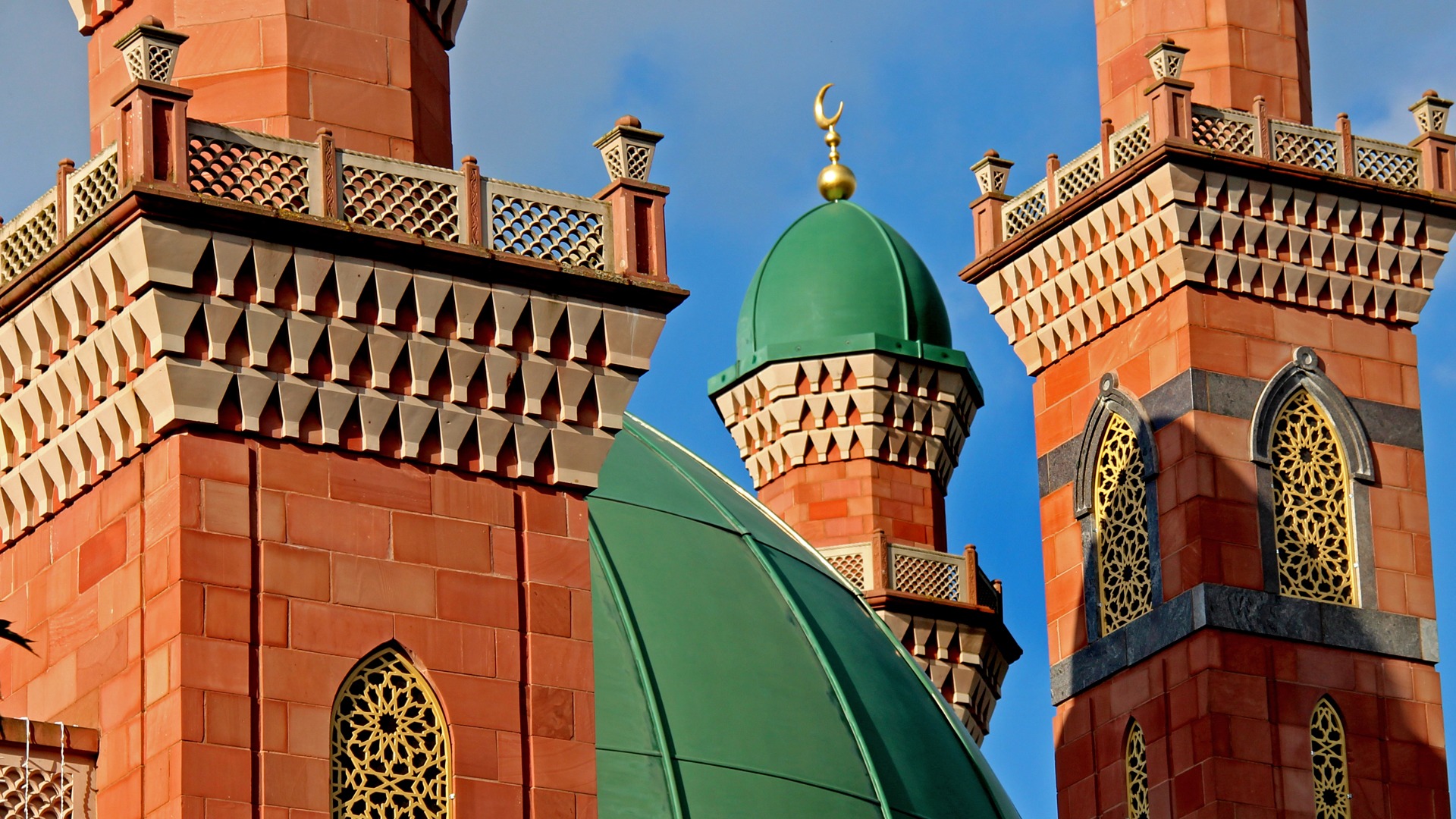
The Bradford Grand Mosque stands as one of the city’s most prominent Islamic buildings. Constructed over many years through community fundraising, its architecture draws on a range of Islamic traditions while reflecting collective effort and permanence.
Nearby, the Markazi Masjid in Dewsbury is among the largest mosques in Britain. More than a place of prayer, it functions as an international centre of Islamic learning, attracting visitors from across the UK and beyond.
East: Layers of Faith and Urban Change
In the east of England, mosques often reveal histories of continuity through change.
Brick Lane Jamme Masjid in East London is a striking example. Built in the eighteenth century as a Huguenot church and later used as a synagogue, it became a mosque in 1976, following the arrival of the Bangladeshi community. Its architecture remains largely unchanged.
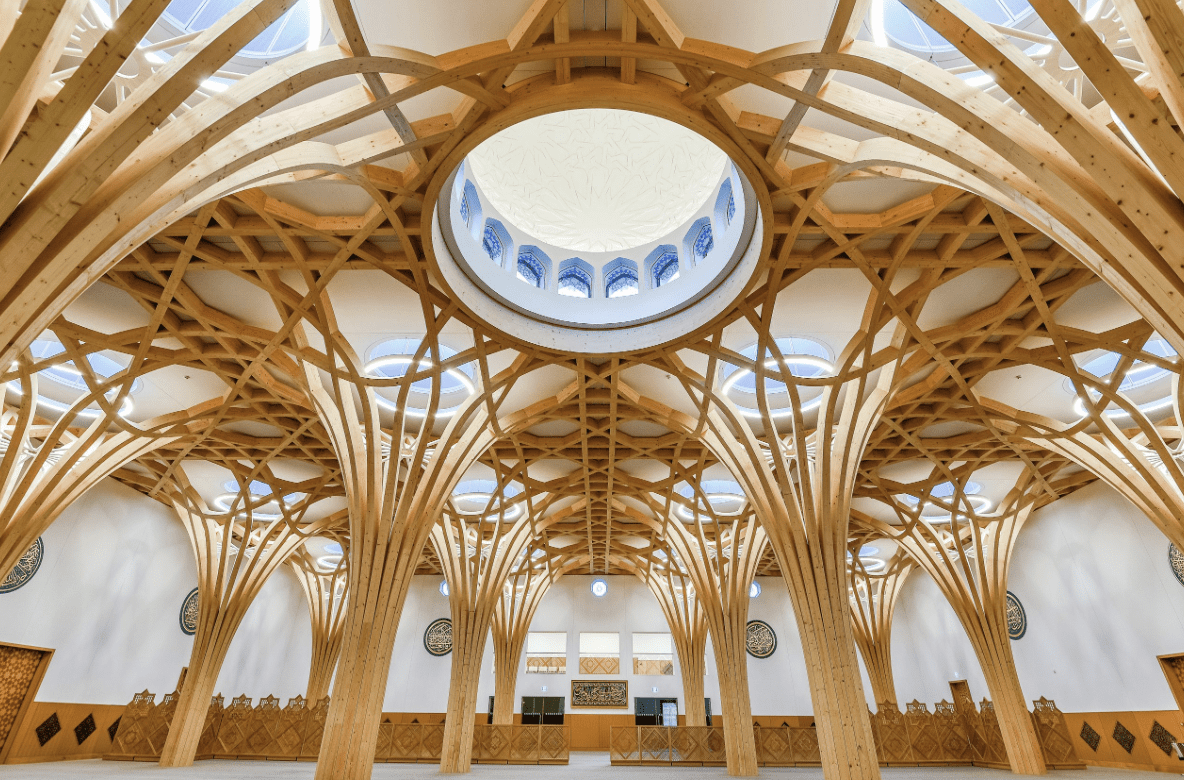
Further north-east, Cambridge Central Mosque, opened in 2019, represents a contemporary vision of British Islam. Designed with sustainability at its core, its timber columns and abundant natural light draw inspiration from both Islamic principles and the surrounding landscape.
Faith in Transit
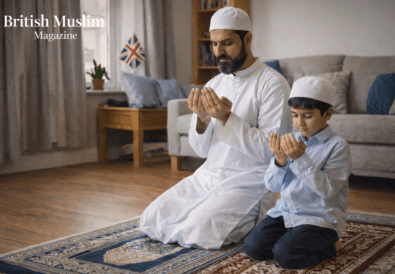
Between these regional markers lie countless smaller, often unseen spaces. Beyond mosques are prayer rooms in universities, airports, hospitals and shopping centres. These spaces are simple, functional and sufficient.
They remind us that sacred Muslim life in Britain is often mobile. Faith is carried between cities, into workplaces and across landscapes.
From south to north, west to east, Britain’s mosques resist a single narrative. They vary in scale, style and visibility, yet share a common origin: community effort.
Muslim heritage in Britain may not always be monumental – but it is deeply rooted, geographically dispersed and quietly sustained. And perhaps that is what makes it unmistakably British.