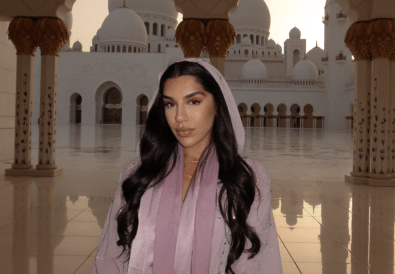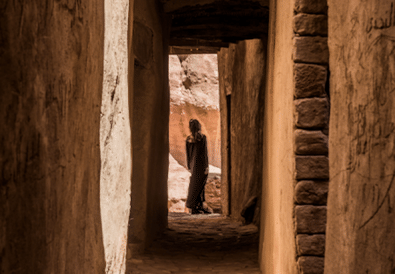


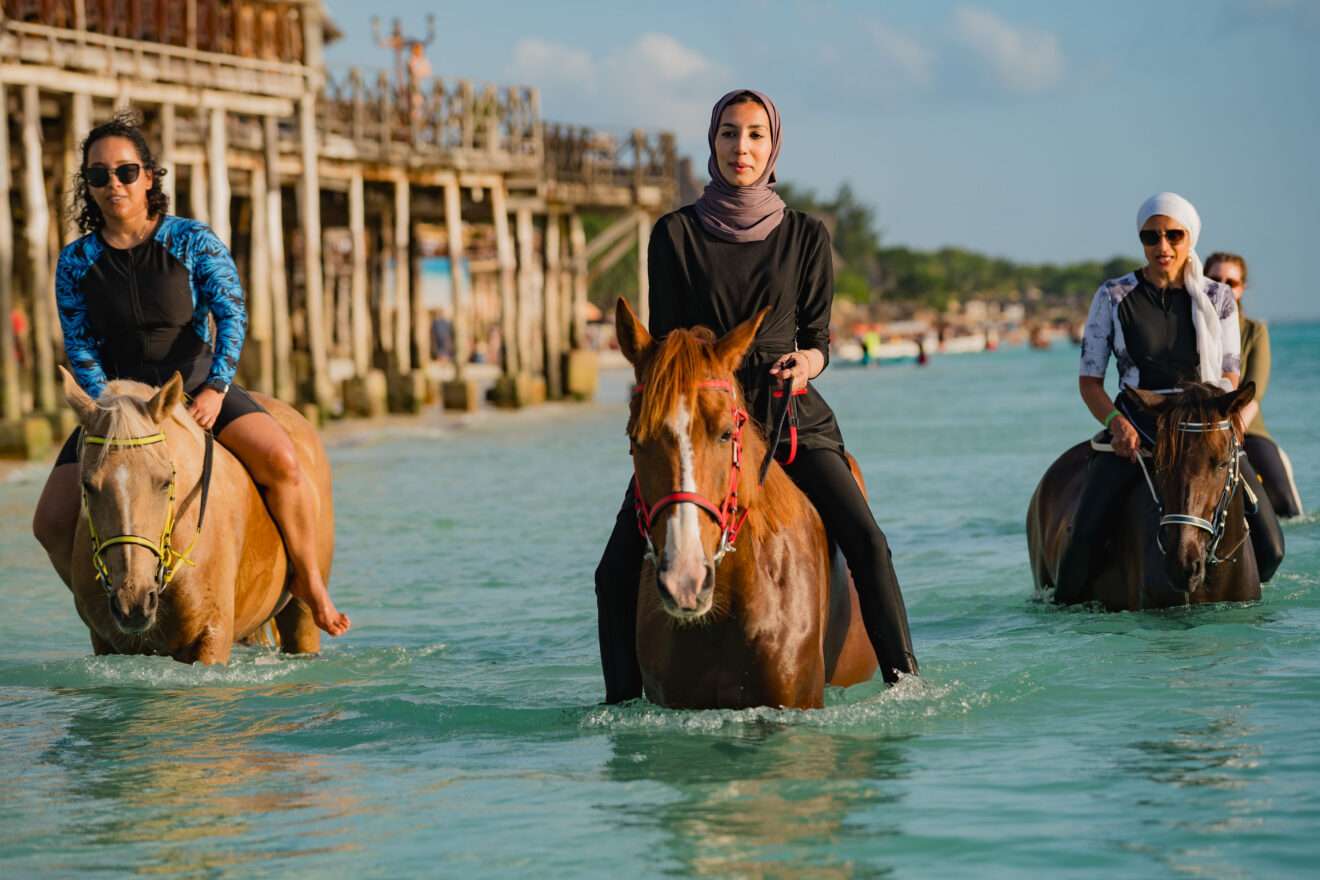
There’s a photograph that keeps circulating in Muslim women’s travel groups online: a cluster of women in their fifties and sixties, hijabs wrapped snug against the wind, arms linked at the edge of a fjord, a waterfall, a desert dune. No husbands in the frame. No children tugging at their sleeves. Just women, mid-life, mid-journey, grinning like they’ve gotten away with something.
In a sense, they have. For decades, the dominant image of the Muslim woman traveller — when she appeared in the Western imagination at all — was young, single, and usually framed as an anomaly or a headline. The idea of a fifty-five-year-old aunty booking a solo flight to Uzbekistan, or a widow flying to Botswana on her own, barely registered as a category. Now it’s one of the fastest-growing corners of the halal travel economy, and the women driving it aren’t apologising for taking up the space.
The numbers behind the shift
The scale of Muslim women’s travel has been building for years. A widely cited Mastercard-CrescentRating study found that an estimated 63 million Muslim women travellers spent roughly £75 billion on trips in a single year, with close to twenty-eight percent of those journeys taken solo — a figure researchers flagged as evidence of a demographic newly willing to see the world on its own terms. Around three in ten of those women travelled with female companions rather than family, a pattern that has only deepened since.
Much of the early coverage of that boom focused on twenty somethings — students, young professionals, honeymooners. But the industry’s own analysts have been tracking a second, quieter wave behind it. The stigma that Muslim women only travel conservatively, chaperoned and confined to Muslim-majority countries, is now outdated, and the same forces reshaping the youth market — rising education, independent income, digital connection — have simply caught up with an older generation who spent their twenties and thirties raising families, building careers, and paying other people’s way before finally getting to their own.
None of this is happening in isolation. Muslim women in midlife are riding a much bigger wave, one reshaping the travel industry as a whole. Industry estimates cited by the loyalty platform Dragonpass suggest women now account for roughly three-quarters to four-fifths of solo travellers worldwide, with safety, autonomy and personal growth cited as the strongest motivators — and nearly a third of women say they’re now building entire trips around rest and wellbeing rather than sightseeing for its own sake.

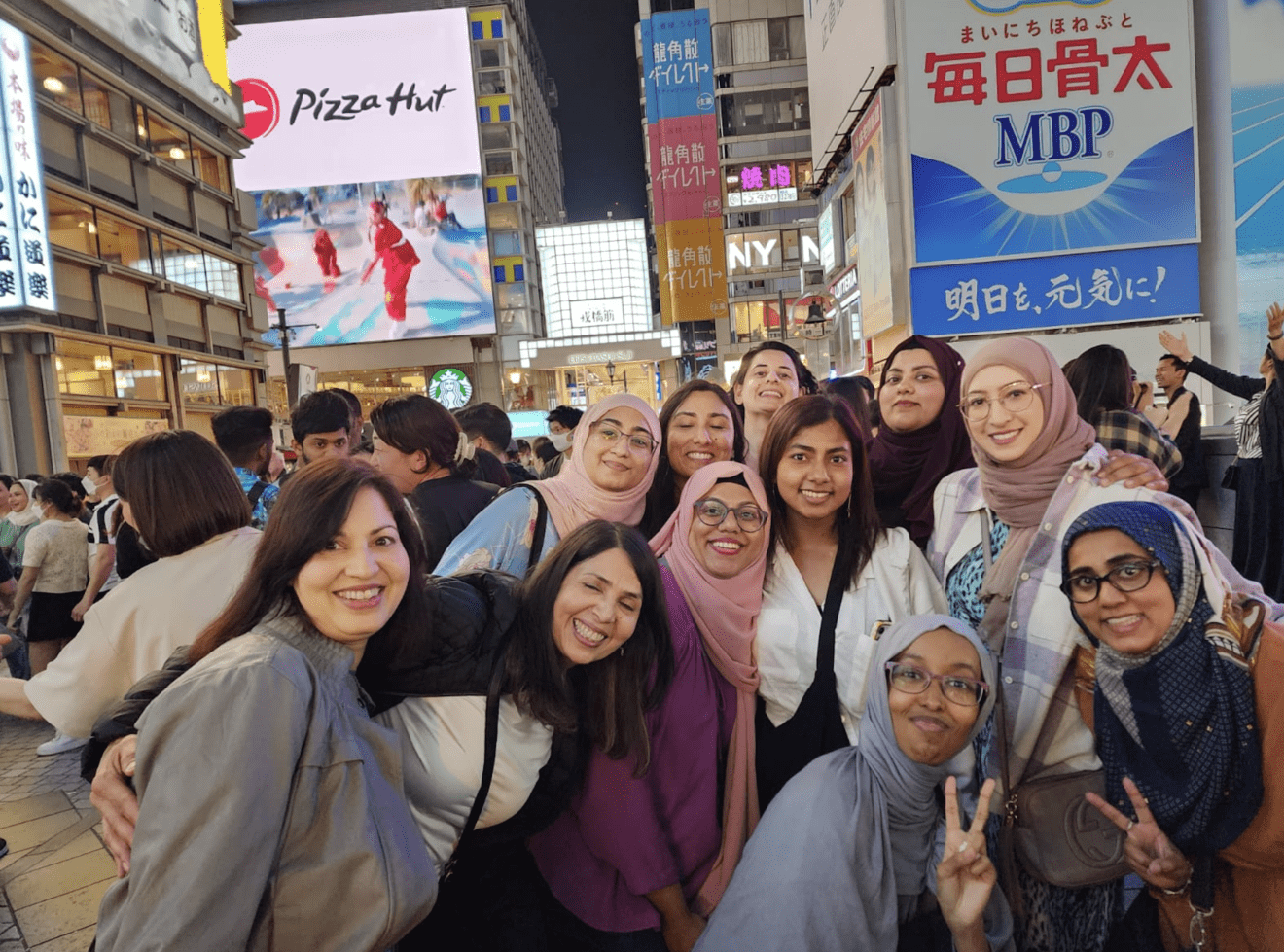
The appetite doesn’t fade with age; if anything it sharpens. A 2025 survey of women aged 35 to 75 by the women-run adventure operator AdventureWomen found that although 45 percent of respondents were in relationships, 54 percent said they travel solo primarily anyway, often choosing trips their partners simply aren’t drawn to. Hiking and trekking topped their wishlist, followed by cultural and historic exploration, and most were planning to spend well into five figures on their ideal trip. “What’s most inspiring to us is seeing how many women are choosing to travel solo,” the company’s president, Paige Davis, has said, “not because they don’t have partners, but because they want to live their own travel dreams on their own terms.”
The data on older women specifically tells its own story. TUI’s Solo Female Travel Index, drawn from a 2026 survey of 2,000 travellers, found that while women in their twenties and thirties remain the most frequent repeat solo travellers, nearly one in six women over 55 say they are actively contemplating a first solo trip — a late-life debut that didn’t really exist as a marketing category a decade ago. Separate research cited in Virtuoso’s Luxury Travel Trends report points to the same shift: women now make up the majority of solo travellers overall, with a Solo Traveller Reader Survey finding that roughly nine in ten women over 50 prefer joining an escorted tour rather than travelling entirely unaccompanied — the exact hybrid of independence-with-company that groups like the Muslim Women’s Travel Group and the Traveling Muslimahs were quietly building years before the wider industry caught up.
What’s distinct about the Muslim women’s version of this story isn’t the desire — it’s the layer of infrastructure needed to satisfy it without compromise: halal food, prayer space, modest-appropriate activities, and communities that understand exactly why those things matter.
Sisterhood as the new travel infrastructure
If there’s one thing that defines this movement, it’s that almost nobody is doing it entirely alone. The “solo” traveller of this generation rarely travels solo for long — she joins a network, a WhatsApp group, a tour built specifically for her.
Sadia Ramzan founded the Muslim Women’s Travel Group in London in 2015 after a solo trip in her thirties left her wanting somewhere to ask other women blunt, practical questions — how a hijab-wearing traveller might be received in a given country, which beaches were realistic, which guides were trustworthy. What began as a Facebook thread has grown into one of the more prominent travel communities for Muslim women worldwide, now numbering in the tens of thousands of members. In 2022 alone the group took over a hundred women on six international trips, from Jordan to Kosovo, with members ranging well past midlife. Ramzan calls it, simply, wanting to “help people find their people.”
Ramzan, whose company now runs trips for women booking well into their forties, fifties and sixties, says there is no single profile that walks through her (virtual) door. Many come from established Muslim diaspora communities across the UK, Europe and North America — “educated, professionally established and financially independent.” In their forties, she says, they’re often single, divorced, never married, or simply without anyone in their circle who wants to travel the way they do. By their fifties and sixties, the picture shifts again: grown children, and often a parent or in-law they’ve been quietly caring for on top of everything else. What ties the two groups together, in her view, has little to do with marital status. “The common denominator isn’t really marital status,” she says. “It is autonomy. They have reached the point where they don’t want to keep postponing experiences because nobody else is available to go with them.”
That doesn’t mean these women are seeking solitude. “Booking solo doesn’t necessarily mean wanting to be alone,” Ramzan explains — many choose group travel specifically for “the friendship, connection and reassurance that comes with travelling alongside other women,” while even the fully independent traveller’s tend to book a walking tour or cooking class along the way, less interested in isolation than in “the freedom to travel on their own terms while still having meaningful human connection.”
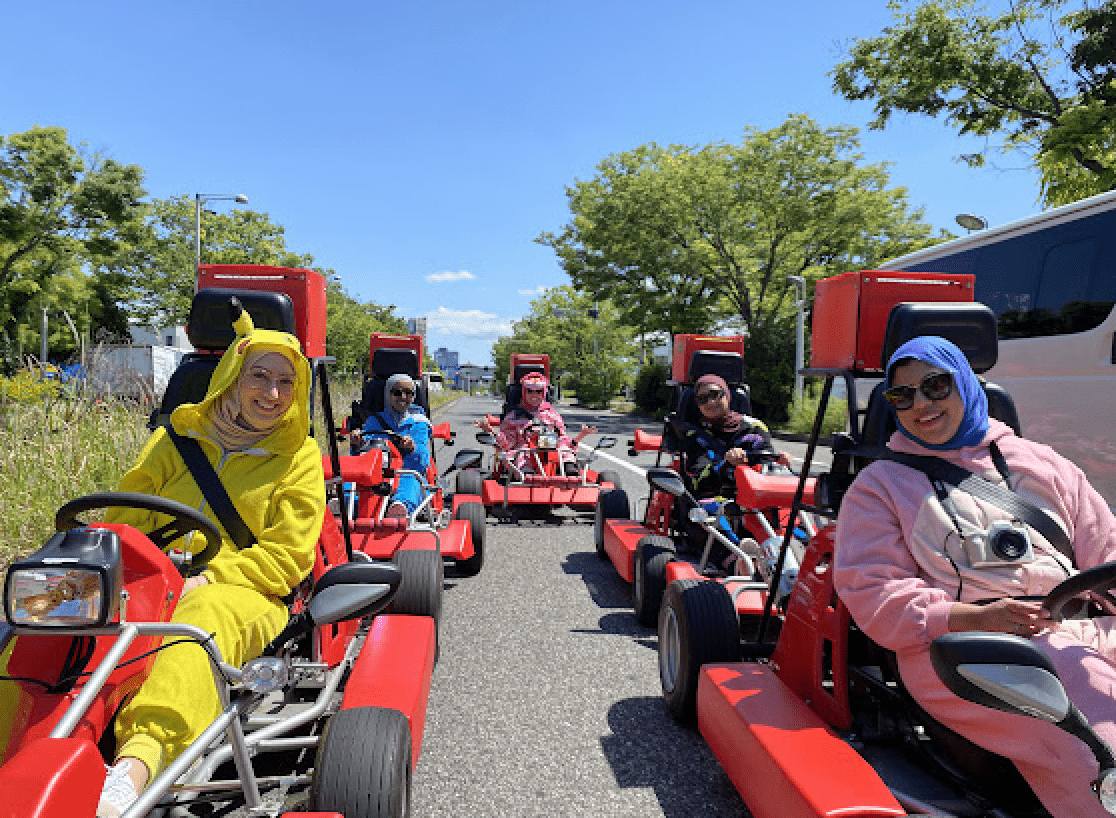
Across the Atlantic, Munazza Muhammad built something similar almost by accident. The Traveling Muslimahs, founded in Philadelphia in 2017, now counts around sixty active members between the ages of thirty-five and sixty-five — teachers, nurses, a chef, an accountant — women who wanted proof that a modest, faith-conscious life and a genuinely adventurous one weren’t mutually exclusive. Their itineraries have included zip lining and waterfall rappelling in modest swimwear, snowy hiking trails, and mosque visits from Abu Dhabi to Mexico. The point, as one member put it, was demonstrating that Muslim women do, in fact, have fun.
These groups function less like traditional tour operators and more like extended family. They vet destinations for prayer space and halal food, they build in rest days around prayer times, and — critically for women who came of age with a very different, often more restrictive script around female independence — they offer a socially sanctioned “yes.” Traveling with a trusted sisterhood answers the safety question a solo woman inevitably has to field from worried parents, husbands, or grown children, while still delivering the sense of self-direction that a family holiday, built around everyone else’s needs, rarely does.
Why midlife, and why now?
Ask women in this cohort why now, and a few answers repeat.
The nest empties, and so does the excuse. For many Muslim women who married and had children relatively early, the twenties and thirties were consumed by caregiving — for children, aging parents, sometimes both. By their late forties and fifties, that daily obligation eases. The trip that was always “someday” becomes possible on a Tuesday.
Financial independence has caught up with intention. A generation of Muslim women who worked, saved, and in many cases built businesses now controls disposable income in a way their mothers largely didn’t. Industry researchers point to rising education and a growing middle class across Muslim-majority regions as core drivers of the broader travel boom — money that, in midlife, is increasingly being spent on the traveller herself rather than solely on family.
Faith-conscious travel has become easy to find. A decade ago, a modest, halal-friendly trip meant painstaking research or sticking to a handful of well-trodden destinations. Now entire platforms, tour operators, and Instagram communities exist purely to route observant women toward mosque-adjacent hotels, alcohol-free excursions, prayer-friendly schedules, and burkini-appropriate adventure sports — removing the logistical friction that once made independent travel feel like more trouble than it was worth.
Grief and reinvention play a role too. Several of the women who’ve built or joined these communities are widows or recently divorced, using travel deliberately as a way back into the world after loss — a use of tourism as processing, not just leisure, that researchers studying Muslim women’s travel motivations have started to document formally.
And there’s simple, hard-won confidence. A woman in her fifties has typically weathered enough of life — raised children, buried parents, run a household or a career — to trust her own judgement on unfamiliar ground in a way she perhaps didn’t at twenty-five. Several founders of these travel communities describe the same arc in their own biography: a first solo trip taken almost accidentally in midlife, followed by the realisation that independence, once tasted, is hard to give back.
Ramzan sees the same pattern across her clients. “Children get older, careers become more established, relationships change,” she says, “and women begin to ask themselves, ‘What do I want to do for me?'” Layered on top of that, for many Muslim women, are years spent caring not just for children but for parents and extended family — so that when the space finally opens up, travel becomes, in her words, “a very powerful expression of independence.” She’s also noticed a broader shift in attitude: women in this age bracket are “much more comfortable putting themselves on the list,” she says, and recognising that taking time for themselves isn’t selfish.
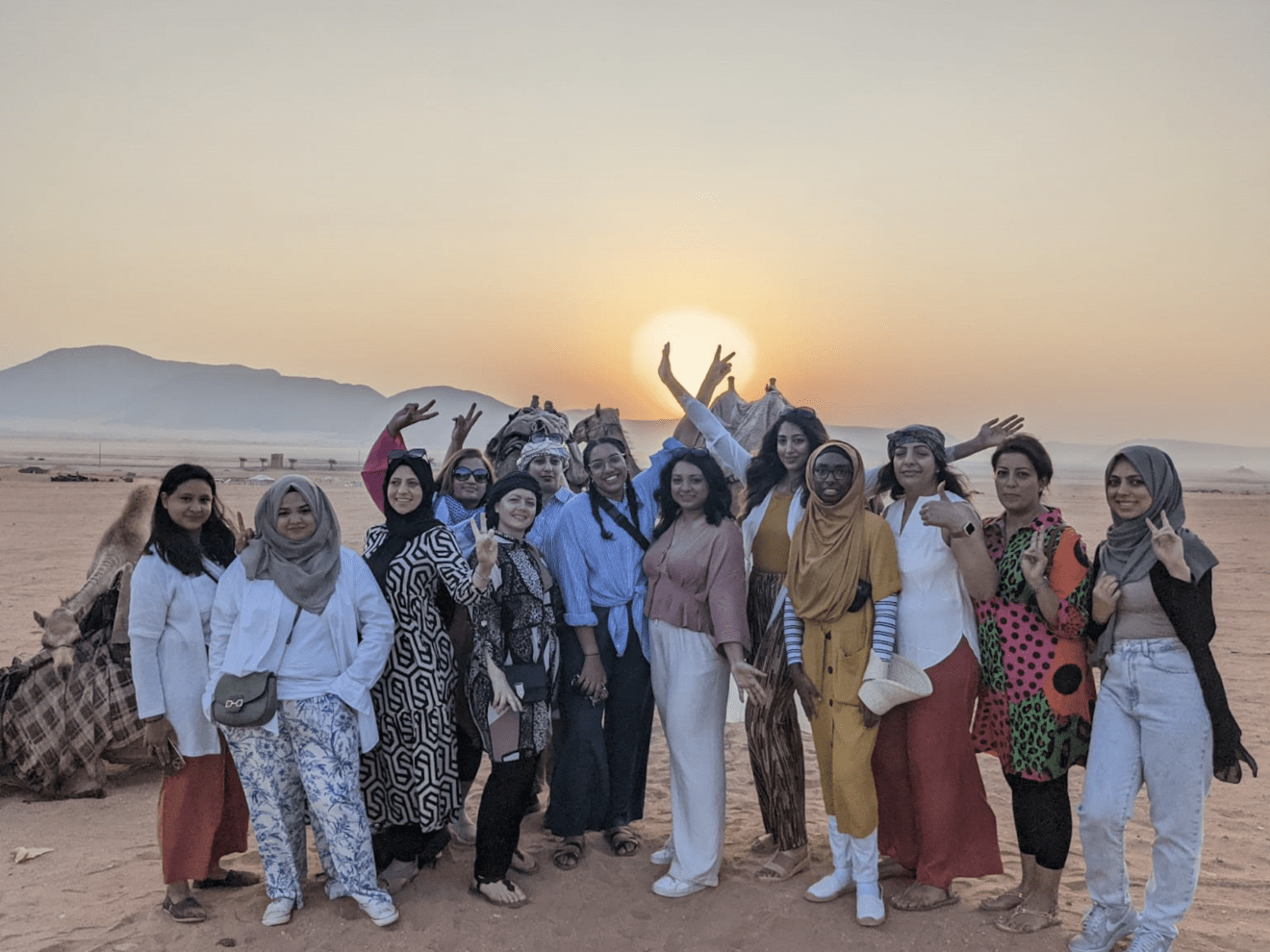
Tellingly, Ramzan says a first solo trip and a first group trip aren’t always separate steps — for many women, the group comes first. “Quite often women test the water through group travel first,” she explains. “They arrive alone, realise they are perfectly capable of navigating the airport, meeting new people and being away from home, and that confidence can then open the door to more independent travel.” As she puts it: “I often think group travel can be the bridge between wanting to travel and believing you can.”
Information has done its own quiet work here too. Where earlier generations travelled with guidebooks, word of mouth, and a heavy reliance on strangers once they landed, today’s midlife traveller can map her route from the airport, read reviews written by other women, locate halal restaurants and prayer spaces, and share her live location with family — all before she’s boarded a flight. “In many ways, the confidence starts before she has even boarded the plane,” Ramzan says. Seeing other Muslim women already doing it matters just as much: “Representation makes something that may once have seemed unusual feel completely achievable.”
Not without friction
None of this has been friction less. Visibly Muslim women — those in hijab or niqab in particular — still report incidents of open hostility abroad: stares, shouted insults, the occasional refusal of service. One London traveller recalled a holiday to Greece that left her too shaken to consider going overseas again, until she found community with other Muslim women willing to travel together. That fear, rather than deterring the current wave of midlife traveller’s, has largely built the very group-travel infrastructure now serving them — dozens of networks exist specifically because solo travel, while newly popular, still isn’t always safe or comfortable to do completely alone.
Family expectations remain a live tension too. Academic research into Muslim women’s travel decisions describes a persistent negotiation between the personal freedom solo travel offers and the social judgement or family disapproval it can still provoke — even as group travel, offering emotional safety in numbers, has become the culturally acceptable middle path for women unwilling to wait for permission that may never come, but unwilling to go entirely unaccompanied either.
Ramzan is careful to separate the physical fear from the emotional one. Safety abroad is “always a consideration,” she says, particularly for visibly Muslim women — but she doesn’t think it’s usually the biggest hurdle. “Sometimes the bigger hurdle is giving yourself permission to go,” she says, after decades spent responsible for children, parents, partners and work. What follows the first trip, though, tends to be the same: a woman comes home having made her own decisions in an unfamiliar country, and, as Ramzan puts it, thinking simply, “I can do this.”
Where they’re going: five Muslim-friendly destinations leading the way
Every year, Mastercard and CrescentRating publish the Global Muslim Travel Index (GMTI), the industry’s most closely watched ranking of Muslim-friendly destinations — assessing 150 countries against an “ACES” framework covering access, communications, environment and services: things like visa ease, halal dining, prayer facilities and overall safety. The 2026 edition, now in its eleventh year, evaluated destinations that together account for over 98 percent of global Muslim visitor arrivals. Here are the five that came out on top.
1. Malaysia. Malaysia has topped the GMTI every single year the index has existed, and 2026 was no exception, scoring 82 out of 100. It remains the gold standard for halal-friendly ease: prayer rooms are standard in malls and airports, halal certification is rigorously enforced, and cities like Kuala Lumpur pair genuine cosmopolitan variety with a deep comfort level for visibly Muslim travellers.
2. Indonesia. Home to the world’s largest Muslim population, Indonesia tied for second place in 2026 with a score of 79. Beyond Bali’s more secular tourist trail, destinations like Yogyakarta, Lombok and the halal-tourism hub of Aceh offer everything from volcano treks to island-hopping, all within an overwhelmingly Muslim-friendly infrastructure.
3. Türkiye. Also tying for second at 79 points, Türkiye offers a rare combination for this generation of travellers: centuries of Islamic architecture and history in Istanbul and beyond, genuinely walkable, well-connected cities, and a tourism economy thoroughly built around halal dining and prayer access — all at a relatively accessible price point compared with the Gulf.
4. Saudi Arabia. Rounding out the three-way tie for second, Saudi Arabia has transformed its tourism offering in recent years well beyond Hajj and Umrah, opening destinations like AlUla’s ancient rock-cut tombs and the Red Sea coast to leisure travellers — a shift that has made it a genuine holiday destination for Muslim women rather than a purely pilgrimage-only one.
5. Qatar. Ranking fifth with a score of 76, Qatar has leaned hard into being a compact, ultra-modern, unambiguously Muslim-friendly stopover and destination in its own right, with Doha’s museums, souqs and waterfront developments offering polish and prayer facilities in equal measure.
Just outside the official top five, Morocco remains one of the most-loved destinations among the women’s travel communities themselves — Fez’s medina, the Sahara’s dunes and Marrakech’s riads have hosted more first solo Muslim-women trips than almost anywhere else, even though its GMTI score currently sits a little further down the list.
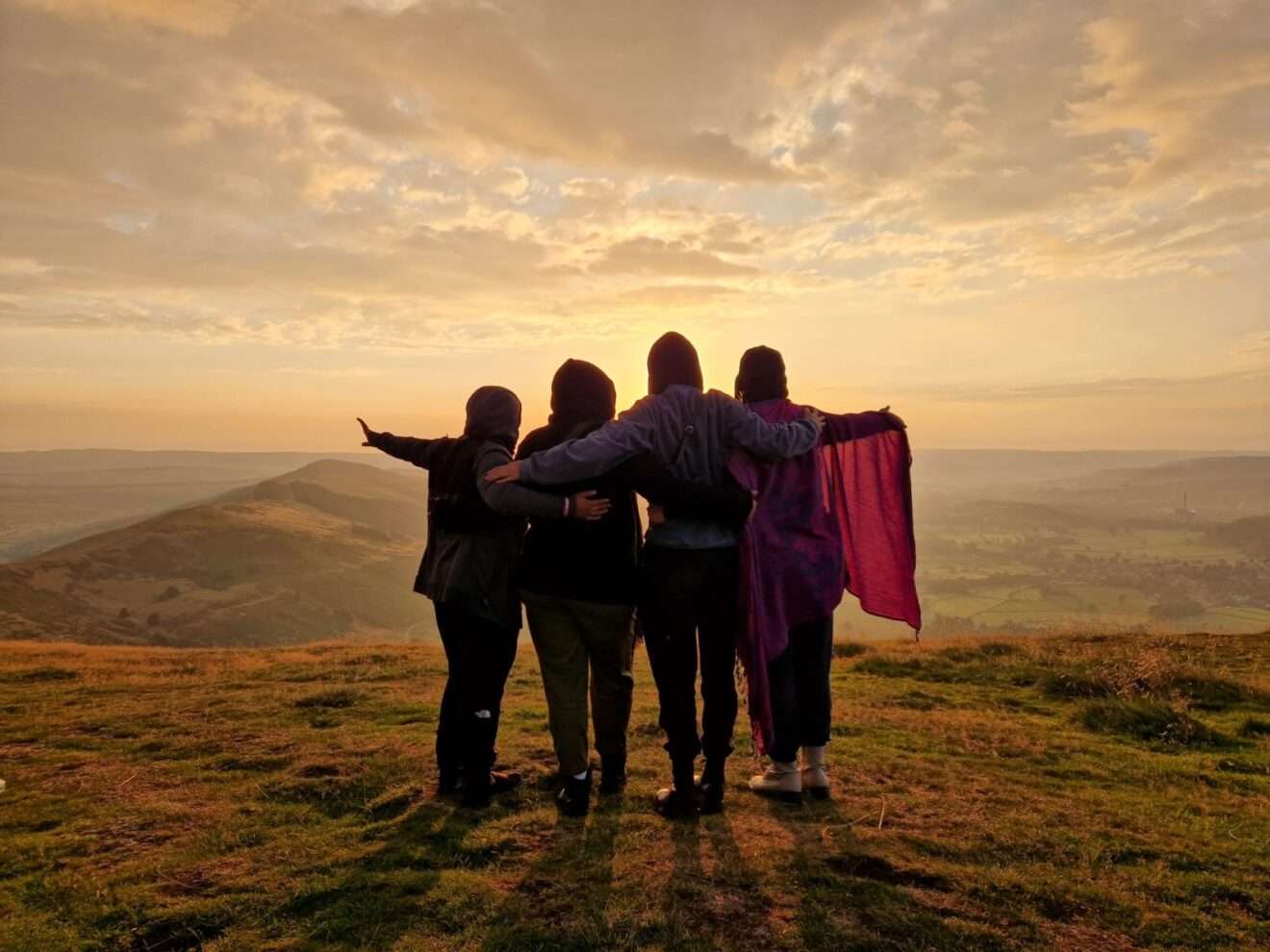
What’s happening now looks less like a trend than a correction. Muslim women have always travelled — as pilgrims, scholars, and wanderers, with centuries of travel writing by Muslim women documenting journeys stretching back generations, many made in grief, in faith, in defiant curiosity. What’s new is the infrastructure: the WhatsApp groups, the dedicated tour operators, the algorithm quietly serving a fifty-eight-year-old widow in Karachi an ad for a women-only hiking trip in Patagonia.
For women who spent decades organising everyone else’s itinerary, that’s no small thing. The suitcase, this time, is packed for one — or better yet, for a dozen women very much like her, all headed the same direction, together.
Natasha Syed is the dynamic Editor-in-Chief of British Muslim Magazine, the UK’s premium Travel & Lifestyle publication catering to Muslim audiences. With a passion for storytelling and a keen eye for celebrating diverse cultures, she leads the magazine in curating inspiring content that bridges heritage, modern luxury, and faith-driven experiences.
Under her leadership, British Muslim Magazine continues to set the standard for authentic, and engaging trusted narratives, making it the go-to source for Muslim traveler's and lifestyle enthusiasts across the UK and beyond.