
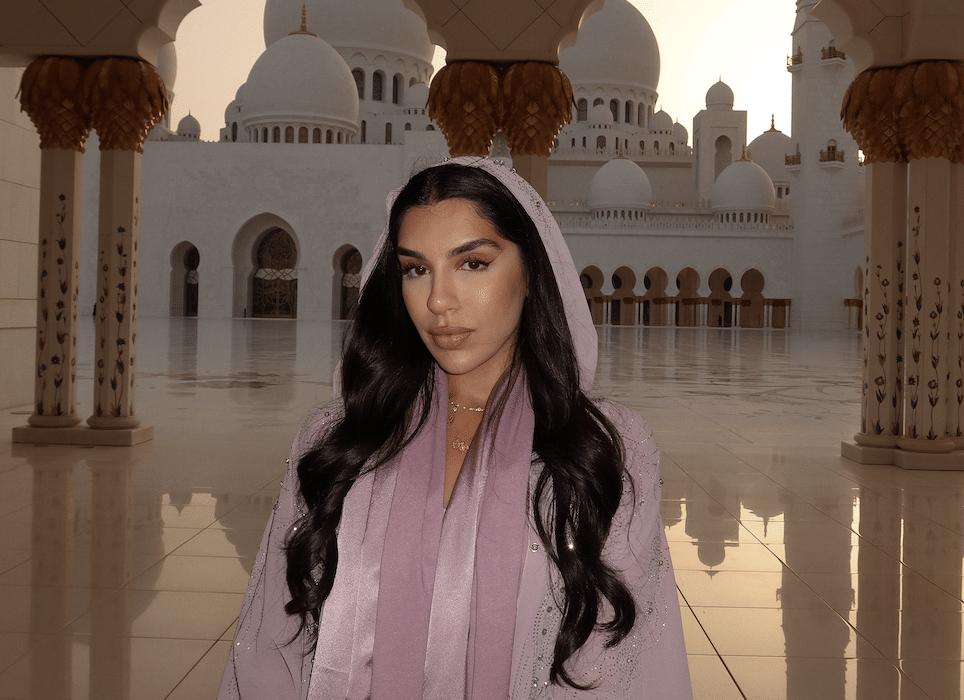
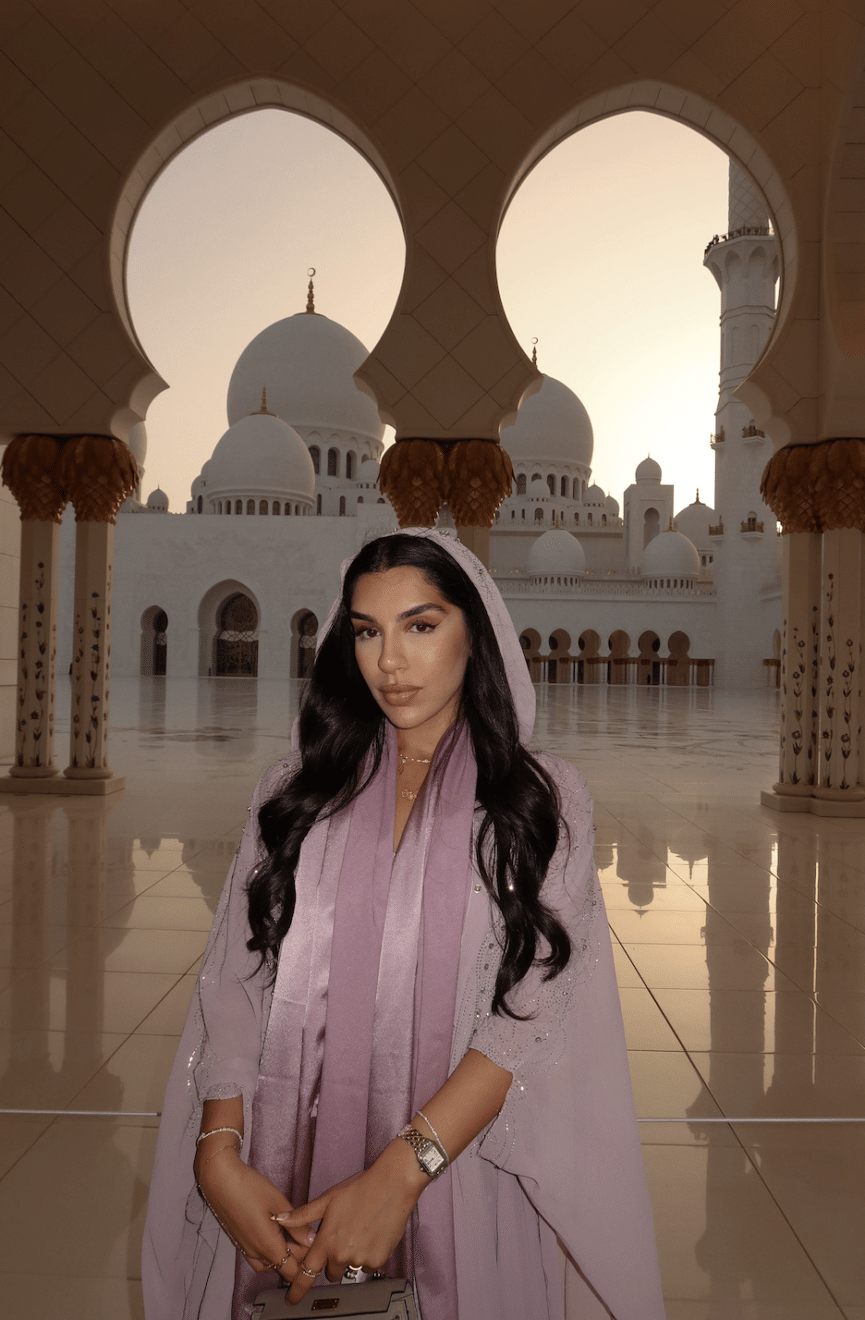
British-Pakistani entrepreneur Juju Sheikh on fitness, faith and creating a wellness platform centred on movement without pressure.
Words Ramsha Vistro
Modern wellness has a branding problem. It speaks the language of self-care while behaving suspiciously like hard labour. Rest is tracked, steps are monetised and sleep has become a performance metric. For 30-year-old personal trainer and Pilates instructor Juju Sheikh, the Cloud Nine Collective app was designed to push against that culture. “Part of the reason I got into fitness was because I had such an awful relationship with my body growing up,” she says, and that line effectively reframes the rest of her work. What she describes now is not transformation so much as adjustment.
“I’ve always wanted to help women see that working out should be seen as a privilege, not punishment.”
The concept for Cloud Nine Collective was born in 2020. “I noticed at the time there was such little representation for brown women in the fitness industry, and I really wanted to change that,” she explains. Having gone to an all-girls boarding school in the English countryside, that feeling of being underrepresented wasn’t too unfamiliar. At the same time, Juju was deciding what form that idea should take, weighing an in-person studio against something more scalable. “I was going between opening a physical location and launching an online platform,” she adds, “and ultimately decided that online, I can reach so many more women. My goal has always been to make fitness and wellness more accessible and approachable.”

That word – accessible – becomes the organising principle of what follows. Cloud Nine Collective is built around removing friction from fitness entirely, something Juju is direct about. “I know how intimidating and confusing the industry can be,” she says. “I created Cloud Nine Collective to simplify working out and eating well.
The app does all the thinking for you.” Cloud Nine Collective’s logic extends into how she describes the user experience; almost deliberately stripped of decision-making. “Once they complete sign up, all they have to do is open the app and do whatever it says,” she explains. “It gives you all your workouts and meals, so you literally do not have to think!” In her own framing, it is less about motivation and more about removal of barriers.
“I like to think of it as a personal wellness fairy in your pocket,” she smiles. Juju also runs a Ramadan series through the app each year, where she shares content around training, routine and wellbeing during the month, bringing together fitness and faith in a way that sits naturally within her wider approach. Before it became a business, fitness was something she was already trying to make sense of personally. She talks about it without distance. “I always had the intention of turning something I’m genuinely passionate about into my career,” she says, acknowledging the gap between intention and reality with a small correction in tone. “As the saying goes, then you’ll never have to work a day in your life!
Though that part isn’t entirely true – I’m always putting so much energy into something I’m genuinely passionate about. The fact that it helps women globally makes it all worth it.” Her personal approach to fitness also began to evolve. One of the biggest changes came when she started learning more about the hormonal cycle, something she only discovered later in her own practice. “I read a book called Period Power a few years ago, which changed everything for me,” she says. “I was simply shocked at how much I didn’t know about my own body.” The impact, she explains, wasn’t theoretical.
“The effects that our hormones have on our energy level, strength and mood throughout the month is something most women completely overlook (including myself at the time!). Becoming aware of each phase and working with my body to honour it genuinely changed my life. I want all women to learn about this and work with their bodies.” Cloud Nine Collective exists entirely online, but Juju has deliberately built physical extensions around it through pop-up events and retreats abroad, including in Tuscany and Marrakech. “I love having an online platform because it means there are no limits to who you can reach,” she says.
“Creating a little safe space online for like-minded women has been amazing. But there truly is nothing like in-person connections.” The effect of those events is something she returns to often, particularly in terms of grounding the scale of the business. “Meeting the women from our community in real life really gives me that solid reminder of ‘you’re actually helping real people make real changes’ which is a feeling I can’t describe,” she smiles.

“I leave every single event with such a full heart. It truly fills my cup.” Alongside this visibility, she has also been open about the realities of having an online presence, including dealing with trolling and racist comments. It’s something she has said comes with being visible online, particularly as a South Asian woman in the fitness space.
The version of the business that appears online through her social media – she is clear – is incomplete. “The ‘boring’ part of my life is not shown online,” she says. “I spend a lot of time on my laptop doing admin. At the end of the day, an app is a tech business.” The difference between how her work is perceived and the reality of building it is something she repeatedly returns to. “I decided to go the long route by creating my entire business from scratch, rather than white labelling… which means I run the entire business myself. It isn’t just about filming workouts; there is so much that goes on behind the scenes.” There was such little representation for brown women in the fitness industry, and I wanted to change that As the business has expanded, so has her awareness of limits.
“The ‘wellness’ side of things doesn’t feel like work,” she says. “It’s the realistic and less fun sides of running a business that cause burnout for me.” That realisation came over time. “I spent many years overworked. As both the business and I grew and evolved, I learnt the importance of delegating tasks and taking breaks. You can’t do everything yourself, 24/7, and that doesn’t mean you’ve failed.” She has also spoken about how she tries to stay grounded in her presentation online. Religion sits within her life in a similar way – present but not publicly structured.
“My dad always taught me to be honest, reliable and never greedy,” she says. “Which are all things that come from our faith.” But she is careful about visibility. “For the most part, I do like to keep my faith more private,” she adds. “I will post here and there about it, but I don’t put it online daily. It’s such a personal thing that doesn’t need to be exposed to online scrutiny.”
Read the fill interview in our Wellness Issue