

There is something slightly surreal about arriving in Doha.
One moment you’re driving through what appears to be an ordinary Gulf city; the next, a building emerges on the horizon that looks as though it belongs in a science-fiction film. A few minutes later, you’re standing beneath a structure inspired by a desert rose, walking through a museum shaped by Islamic geometry, or sitting in the shade of a courtyard designed around principles that have been used in this part of the world for centuries.
Doha can sometimes feel like a city that has been built at extraordinary speed. And, in many ways, it has. But spend a little time here and you begin to notice that beneath all the glass, steel and ambitious contemporary design is a much older story.
That is what makes exploring Doha’s architecture so interesting.
It isn’t simply a collection of spectacular buildings. It is a conversation between what Qatar was, what it has become, and what it hopes to be.


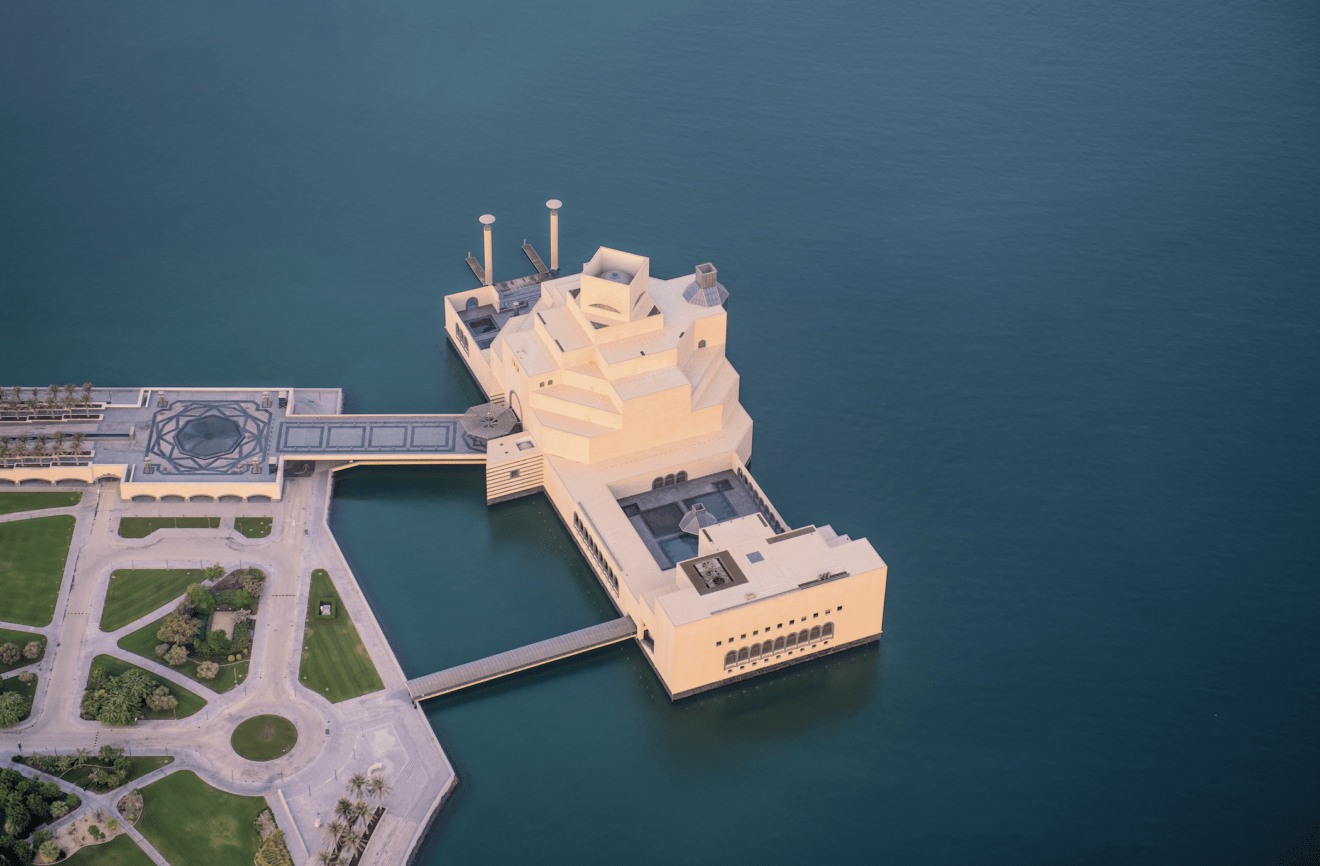
Start with the Museum of Islamic Art
If you only have time to see one building in Doha, make it the Museum of Islamic Art.
Designed by the legendary architect I. M. Pei, the museum sits on its own island at the edge of Doha Bay. From a distance, it looks almost deceptively simple: a series of geometric forms rising from the water.
Get closer and the details begin to reveal themselves.
Pei drew inspiration from Islamic architecture, particularly the geometric purity of historic mosques and the play of light and shadow found within them. There is something calming about the building, particularly when the harsh Gulf sun begins to soften towards the evening.
And then there is the view.
From the museum, Doha stretches across the water — an ever-changing skyline of towers, minarets and modern structures. It is one of those places where you can quite literally see several versions of Qatar at once.
Inside, the museum houses more than 1,400 years of Islamic art from across the Muslim world. But you don’t necessarily need to be an art historian to appreciate it. The objects tell stories of movement, trade, faith, craftsmanship and the interconnectedness of Muslim societies across enormous distances.
In that sense, the museum is about much more than beautiful objects behind glass. It is a reminder of just how expansive the Islamic world has always been.
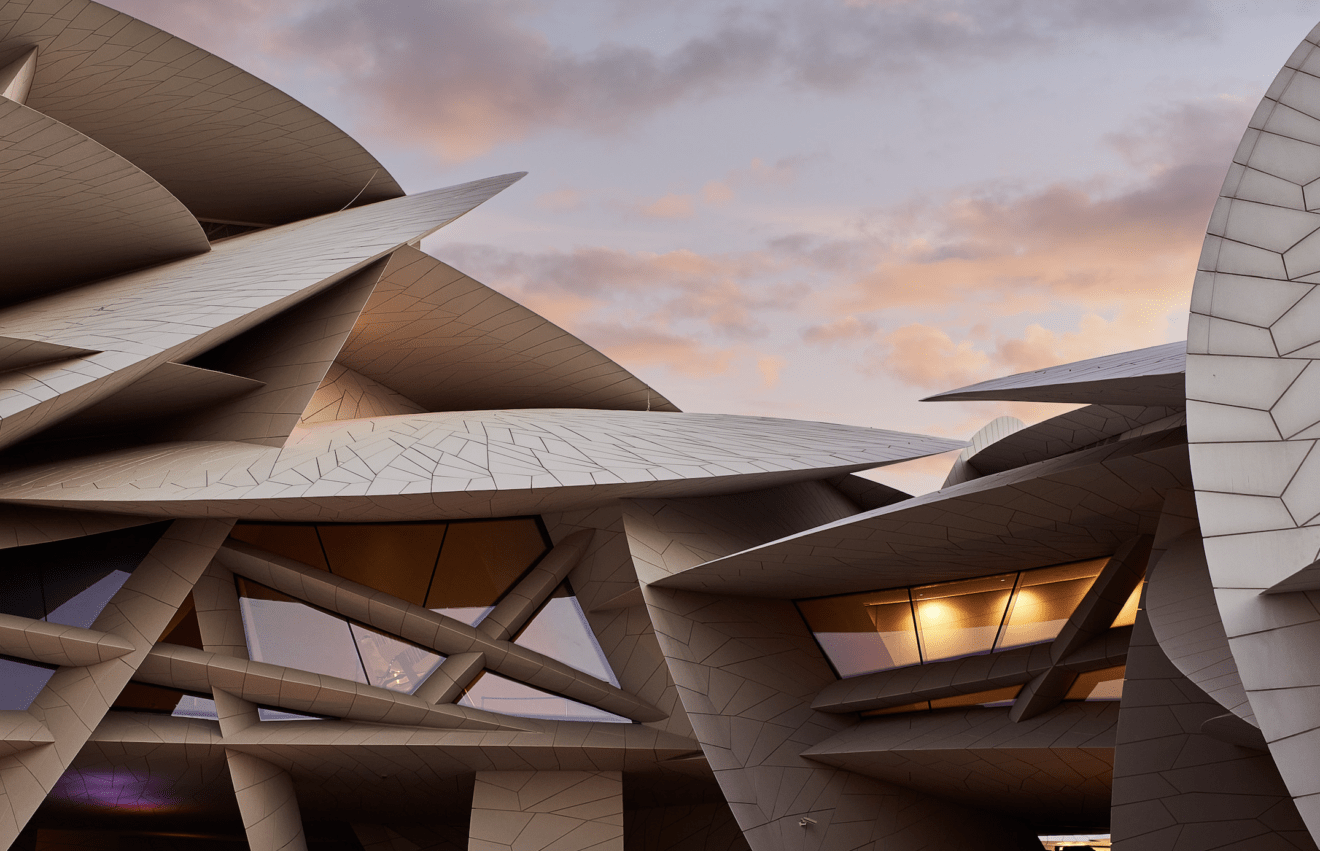
A desert rose in the middle of Doha
Then there is the National Museum of Qatar, and it is difficult not to stop and stare.


Designed by French architect Jean Nouvel, the building takes its form from the desert rose — a natural formation created when crystals gather beneath the surface of the desert.
Its enormous discs overlap and intersect, creating something that feels simultaneously geological and futuristic.
But perhaps the most interesting thing is what happens once you go inside.
The museum takes you through Qatar’s story from its geological beginnings, through Bedouin life, pearl diving and the country’s relationship with the sea, to the discovery of oil and gas and the extraordinary transformation that followed.
It is easy, when looking at modern Doha, to forget that this was once a collection of small settlements shaped by the desert and the Gulf. The museum makes sure you don’t.
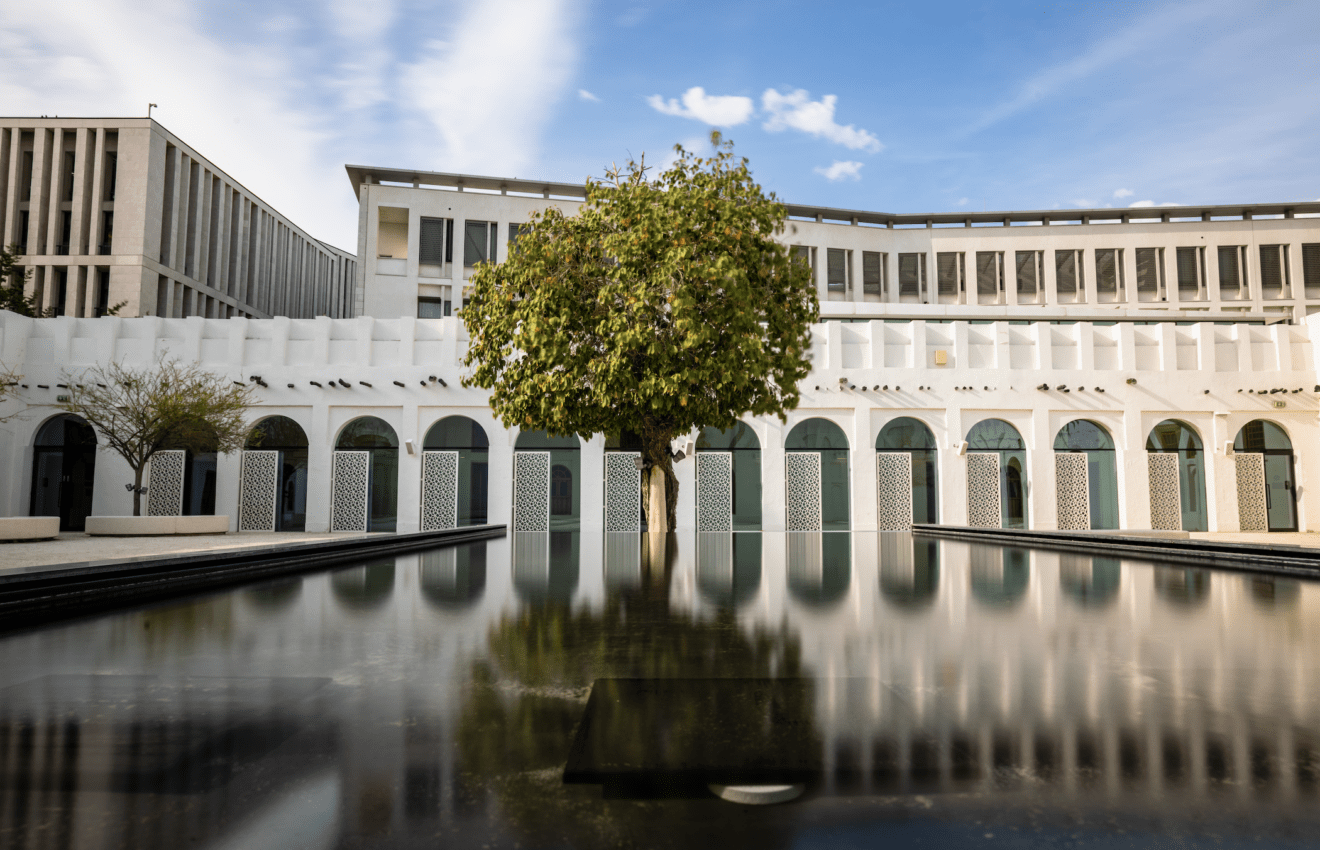
Finding the old city beneath the new
One of the best places to understand that transformation is Msheireb Downtown Doha.
At first glance, Msheireb might seem like another shiny new development. But this is where things get interesting.
The district was built on the site of what was historically the heart of Doha, with the project attempting to bring some of the character and principles of the old city into a contemporary urban environment.
There are shaded streets, courtyards, narrow passages and buildings designed with the Gulf climate in mind. The idea isn’t simply to recreate old Doha, but to ask what traditional Qatari architecture might look like if it were designed for today’s city.
It makes walking around here surprisingly enjoyable.


And that’s important because Doha is often experienced from inside a car. Msheireb encourages you to slow down and explore on foot. Within the district, the Msheireb Museums occupy restored heritage houses and offer a much more intimate perspective on Qatar’s past.
These aren’t grand monuments. They are homes, courtyards and rooms — the sorts of spaces where ordinary lives were once lived. And sometimes that tells you more about a place than a skyscraper ever can.
Look up
Eventually, though, you have to look up.
Doha’s skyline is extraordinary.
The towers of West Bay rise dramatically above the Corniche, each competing for attention with its own unusual shape, façade or silhouette.
One of the most recognisable is Doha Tower, also designed by Jean Nouvel. Its exterior is wrapped in an intricate pattern inspired by the traditional mashrabiya.
The mashrabiya is more than a decorative motif. Traditionally, these screens helped provide shade, ventilation and privacy while allowing light into a building.
Here, that idea has been transformed into the skin of a contemporary skyscraper.
And this is where Doha’s architecture becomes particularly fascinating. The connection to Islamic design isn’t always a literal reference to the past. Sometimes it is an idea — shade, privacy, proportion, geometry, the relationship between inside and outside — translated into a completely different architectural language.
A library that feels like a statement
At Education City, another building offers a very different kind of experience.
The Qatar National Library, designed by Rem Koolhaas, is enormous, bright and strikingly open.
There is something almost symbolic about it.
Libraries traditionally suggest quiet, enclosed spaces. Here, the architecture feels expansive and communal. Books, people, technology and research occupy one enormous flowing space.
Education City itself reflects Qatar’s ambitions beyond oil and gas — a concentration of universities, research institutions and educational organisations from around the world.
And the library sits at the centre of that idea: knowledge as infrastructure.
It is perhaps one of the clearest examples of contemporary Qatar building not just for today, but for the generations that come after.
The art you don’t expect
One of the things I particularly enjoy about Qatar is that you don’t necessarily have to enter a museum to encounter art.
Across the country, Qatar Museums has commissioned some remarkable works for public spaces and landscapes.
Richard Serra’s East-West/West-East is perhaps the most memorable.
Four enormous steel plates cut across the landscape of the Brouq Nature Reserve, standing starkly against the desert. The installation is simple, but its scale changes the way you experience the landscape around it.
You don’t just look at the artwork. You become aware of the desert.
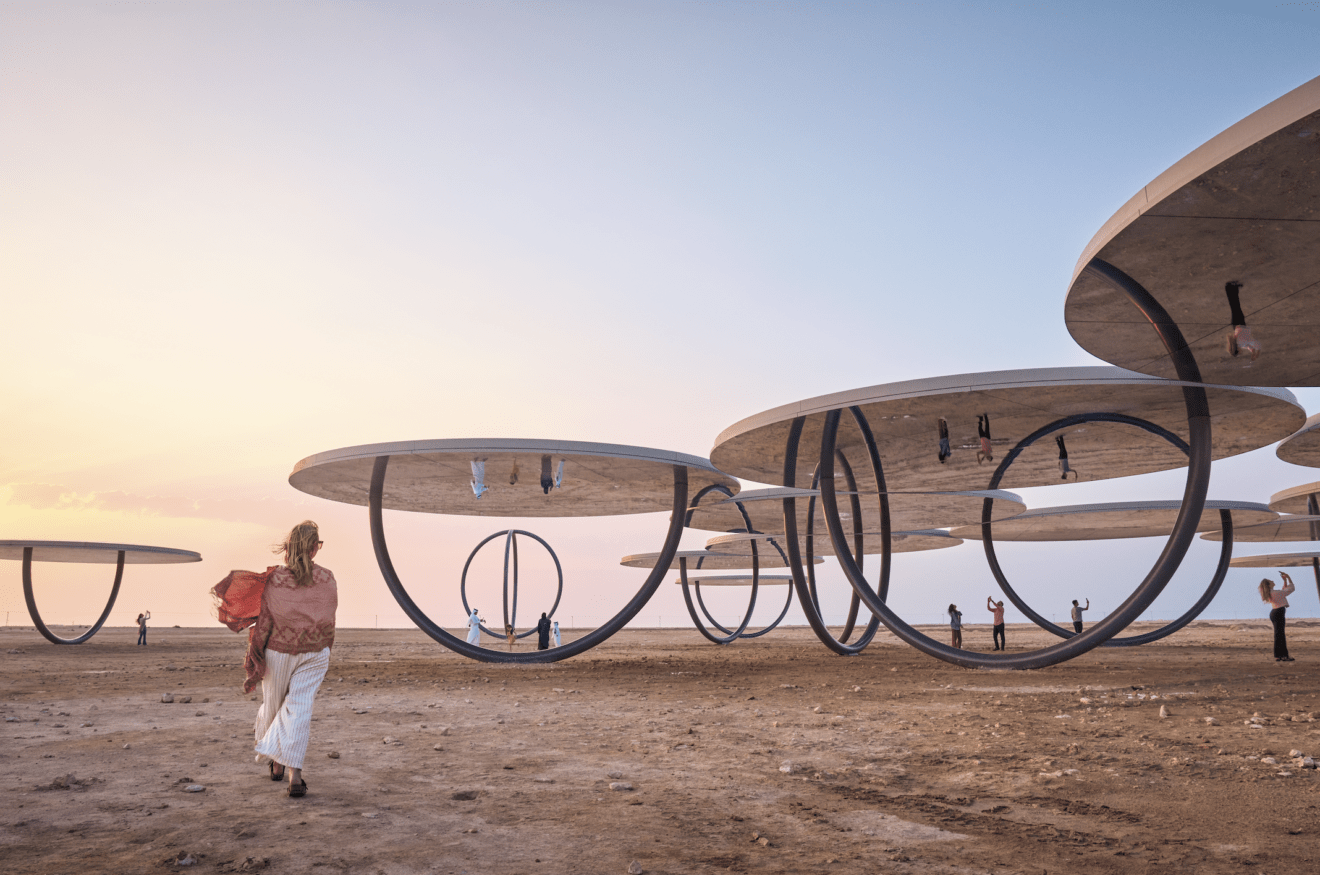
Other works, including pieces by Damien Hirst and Olafur Eliasson, appear in very different settings, creating an unusual relationship between art, architecture and the natural environment.
It means that travelling around Qatar can feel like moving between galleries — except the walls keep changing.
More than a skyline
What I find most interesting about Doha isn’t necessarily the individual buildings.
It is the question they collectively seem to ask.
What does a modern Muslim city look like?
There isn’t one answer, of course. But Doha is clearly experimenting with its own.
You see it in the way Islamic geometry appears in contemporary façades. In the way traditional ideas around shade and privacy influence modern buildings. In museums that preserve the country’s memory while using some of the world’s most ambitious architecture. And in neighbourhoods attempting to make a rapidly developing city feel walkable, human and connected to its past.
There are moments when Doha can feel almost impossibly futuristic.
Then you’ll turn a corner and find a quiet courtyard, a traditional doorway, a mosque or an old house that reminds you that the story didn’t begin with the skyscrapers.
Perhaps that is the most compelling thing about Qatar’s modern marvels.
They aren’t simply buildings designed to impress the visitor.
At their best, they are attempts to tell a story — about a desert, a people, a faith, a coastline, a rapidly changing country and an uncertain but exciting future.
And once you start looking at Doha that way, the city’s architecture becomes much more than something to photograph.
It becomes a way of understanding Qatar itself.
Explore more of Qatar: Visit Qatar